 Aviator
Aviator signals: the honest breakdown
"Aviator signals" promise to tell you when to bet and when to cash out — usually through a Telegram bot, a signal app, or a paid channel. The uncomfortable truth: a signal that predicts an Aviator round can't exist, because every result is locked and provably fair before the plane even moves. But the idea behind a signal — knowing your odds before you commit — is completely valid. So below is the real thing: a live odds tool that gives you the one honest "signal" there is.
What Aviator signals claim to be
Signal sellers market a few flavours, all built to look scientific:
- Signal bots — a Telegram bot that "detects" the next high multiplier and pings you to bet.
- Signal apps / APKs — an app showing a countdown to the next "safe" cash-out point.
- Predictor + signal combos — a fake predictor wrapped in a subscription "VIP" room.
They share a look: confident numbers, timers, and a stream of winning screenshots.
Why signal bots are fake
The screenshots are the tell. It's trivial to post a "signal" after a round and crop the ones that happened to match. Mechanically, a real signal is impossible because:
- The crash point is generated from a server seed the bot cannot see, hashed with player seeds, before the round.
- Rounds are independent — no live "pattern" carries into the next flight.
- If any bot truly worked, the maths edge would bankrupt the casino in days. It never does.
What signal groups actually monetise is you: a subscription fee, a referral link to a dodgy casino, or an APK that harvests data.
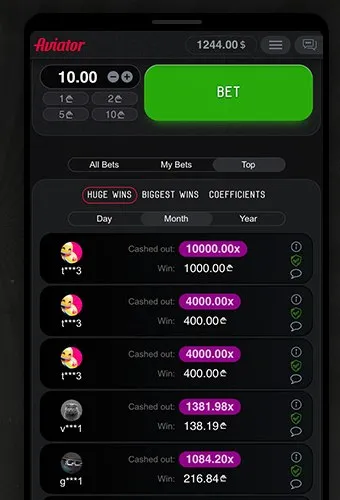
The real signal: probability + discipline
Here is the only signal worth acting on — the true chance a round reaches your target. It's fixed at 0.97 ÷ target. Set your target below and you'll see exactly how often it should land and how long you'll typically wait. Pair that with a stop-loss and a fixed stake and you're playing smarter than anyone paying for a "VIP" room.
Free vs paid signal groups — both miss the point
Free groups exist to funnel you to an affiliate casino; paid groups add a fee on top. Neither can beat 97% RTP, because nothing can. If you want structure, build your own: pick a cash-out target you're comfortable with, decide a daily loss limit, and stick to both. That's a plan — not a prophecy.
How a signal group manufactures a 90% win rate
There is no trickery needed. Watch the arithmetic:
- Post low targets. A signal to cash out at 1.30× is right 74.6% of the time on its own. At 1.20× it is right 80.8% of the time. The maths does the work.
- Post many signals. Twenty a day means some sequence of wins is guaranteed to exist somewhere in the log.
- Screenshot only the wins. The losses stay unposted, and nobody audits a Telegram channel.
- Delete or edit misses. Most channels allow it, and members joining later see only what survived.
- Let members do the rest. Someone always wins on any given signal, and their screenshot is free advertising.
| Signal target | Success rate with no tool at all | How it will be marketed |
|---|---|---|
| 1.20× | 80.8% | "80%+ accuracy, verified" |
| 1.30× | 74.6% | "3 out of 4 signals hit" |
| 1.50× | 64.7% | "Consistent daily profit" |
| 2.00× | 48.5% | "Balanced risk mode" |
Every figure in the second column is just 0.97 ÷ x. A group posting 1.30× calls and claiming a 75% hit rate is describing the game, not its own performance.
The bit the win rate hides
A 75% win rate at 1.30× still loses money, which is the part no screenshot shows. Win 75 rounds out of 100 at ₹100 a round and you collect ₹9,750 on ₹10,000 staked — the missing ₹250 is the house edge doing exactly what it always does. A high win rate and a losing strategy are perfectly compatible, and signal groups live in that gap.
Add a subscription of ₹1,000 a month on top and the arithmetic gets worse, not better.
What to do with a group you are already in
- Log the calls yourself for a week — every signal, not just the ones that hit. The comparison with the group's own claims is usually the end of the discussion.
- Compare the hit rate to 0.97 ÷ x for the target being called. Matching it means the group is adding nothing; beating it consistently over hundreds of calls would be a genuinely extraordinary claim.
- Never forward the deposit link. Referral commissions are the actual business model, and recruitment is where the money is.
FAQ about Aviator signals
Do Aviator signals really work?
No. The game is provably fair and random, so no bot or channel can know when a round will crash. The winning screenshots are selected after the fact.
Are Aviator signal bots on Telegram safe?
Treat them as scams. At best you pay for random guesses; at worst you're pushed to a shady casino or an APK that steals data. Don't pay and don't sideload their apps.
Is there any legitimate Aviator signal?
Only the probability of a target, which is 0.97 ÷ that target. Our tool shows it live. That's real information you can plan around — unlike a "next crash" prediction, which can't exist.
Why do signal groups post so many wins?
Because they hide the losses. Posting a "signal" after a round and screenshotting only the hits makes any random guesser look psychic.
Can a signal group have a genuine 75% win rate?
Easily — by calling 1.30× targets, which reach that multiplier 74.6% of the time with no tool involved. The win rate is real and the implied skill is not, which is why a group posting low targets can be truthful about its hit rate and still be selling nothing.
If the win rate is real, why do I still lose money?
Because win rate and profit are different things. Winning 75% of rounds at a 1.30× target returns ₹9,750 on ₹10,000 staked — the 3% house edge applies to everything you stake regardless of how often you win.
Are paid Aviator signals more accurate than free ones?
No. Both are generated the same way, because the information a genuine signal would need is a committed server seed that neither can access. The paid tier changes the price, not the odds.
Ready to play Aviator?
Try it free in our provably-fair demo, or play the real Aviator with fast UPI payouts at a top-rated casino.